You frame your shot, press the shutter, and the preview looks soft — again. The culprit often isn’t your camera, but a subtle hand tremor that magnifies into motion blur at slower shutter speeds. This guide pulls together practical, evidence-based answers for photographers who deal with shaky hands, covering everything from proper grip to image stabilization specs and post-processing fixes.
Shutter speed rule to avoid blur: 1 / focal length (e.g., 1/50s for 50mm lens) ·
Adults with essential tremor: approximately 5% (CDC) ·
Image stabilization stops typical: 4–5 stops (manufacturer data) ·
Tripod sharpness improvement: dramatically reduces micro‑motions
Quick snapshot
- Essential tremor and medical conditions — Centers for Disease Control and Prevention
- Fatigue, caffeine, anxiety — Explore with Alec
- Camera weight and posture — Adobe
- Proper grip and elbow tuck — Nikon USA
- Breath control — Adobe
- Shutter speed rule — Canon Europe
- Tripods, monopods, gimbals — Nikon USA
- Image stabilization — Canon Europe
- Remote shutter releases — Nikon USA
- Sharpening tools — Peter McKinnon
- Deblurring software — Peter McKinnon
- When editing is enough — Adam Rhodes Photography
Four key facts, one pattern: the solution stack runs from body mechanics through hardware to software, each layer compensating for the one before.
| Variable | Value |
|---|---|
| Shutter speed rule | 1 / focal length (e.g., 1/50s for 50mm) |
| Essential tremor prevalence | ~5% of adults (Centers for Disease Control and Prevention) |
| Typical IS stops | 4–5 stops |
| Tripod vs handheld sharpness | Tripod eliminates micro‑motion |
The pattern: four layers of defense — body, technique, gear, and editing — each reduces the burden on the next.
Why Do My Hands Shake When Taking Pictures?
The causes fall into two overlapping buckets: physiological factors your body controls and ergonomic factors you can adjust with technique and gear. Understanding the root helps you choose the right fix — because a tripod won’t solve caffeine-induced tremor any more than deep breathing will brace a 500mm lens.
Common medical causes of hand trembling
- Essential tremor — affects roughly 5% of adults, according to the CDC (the U.S. public health agency), making it one of the most common movement disorders.
- Anxiety and adrenaline — the fight-or-flight response tenses muscles and increases fine-motor shaking, especially in high-stakes shooting scenarios (weddings, events).
- Caffeine and stimulants — a known amplifier of tremor; even one cup can push hand steadiness past the threshold for sharp handheld shots.
The implication: ignoring the cause and jumping straight to gear risks disappointment — stabilization can offset some tremor but won’t cancel fatigue or adrenaline spikes.
How fatigue and caffeine affect stability
- Prolonged shooting with a heavy lens fatigues forearm muscles, which then oscillate at lower frequencies that mimic tremor, as noted by Explore with Alec (a hands-on photo educator).
- Caffeine’s half-life of 4–6 hours means its tremor effect can last through an entire afternoon shoot.
Why camera weight and posture matter
- Holding the camera with arms extended turns your upper body into a human monopod with a loose hinge — your elbows are the weak point.
- Adobe (the imaging software company) recommends keeping the camera close to the body and bracing elbows against your torso for stability.
The implication: shaky hands in photography is rarely one thing — it’s a system. Fix the system, not just the symptom.
How Do You Stop Your Hands from Shaking When Taking a Picture?
These are the immediate techniques that cost nothing and work anywhere — the first line of defense against camera shake.
Proper camera grip and hand position
- Right hand grips the body; left hand cradles the lens from below, palm up — this creates a stable platform.
- Tuck your elbows into your ribs, not out to the sides. Nikon USA (camera manufacturer) stresses that this three-point contact dramatically reduces sway.
- Aim for a three-point grip: both hands plus the camera pressed lightly against your face or forehead.
Breathing and stance techniques
- Stand with feet shoulder-width apart, one foot half a step ahead for balance.
- Breathe in, exhale half-way, and press the shutter during the natural pause at the end of the exhale — the diaphragm is relaxed and the body is most still. This technique is standard advice from Adobe (the imaging software company).
Adjusting shutter speed for sharpness
- The reciprocal rule: use a shutter speed at least 1 / focal length. For a 50mm lens that means 1/50s or faster. Canon Europe (camera and lens manufacturer) recommends this as a baseline, noting that image stabilization may allow slower speeds.
- For people with visible tremor, a baseline of 1/250s is often suggested — as discussed by Adam Rhodes Photography (a working photographer who openly shoots with a tremor) — but optimal speed depends on focal length and how much your hands actually move.
What this means: these techniques form a free, portable stabilization system. Master them before spending on gear.
A photographer with a mild tremor can shoot sharp at 1/125s using proper grip and stance — the same person with arms extended might need 1/500s. The body is your most accessible stabilizer.
How to Keep Hands Steady When Taking Pictures
When your own frame isn’t enough, hardware steps in. These tools shift the stability burden from muscle to machine.
Using tripods and monopods
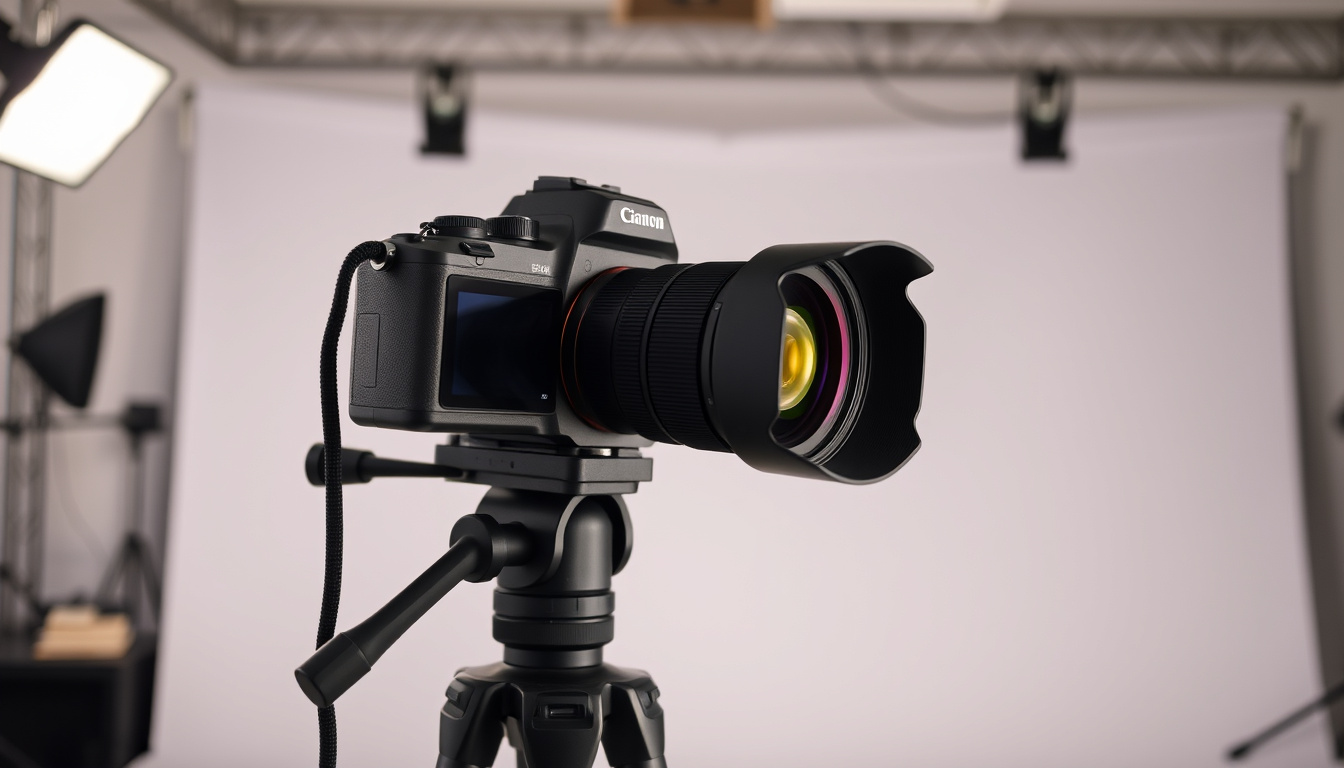
- Tripod: the gold standard for static subjects. Nikon USA (camera manufacturer) calls it the most reliable method to eliminate hand-shake for still compositions.
- Monopod: a middle ground — it eliminates vertical shake but still allows some horizontal movement. Canon Europe (camera and lens manufacturer) describes it as a practical alternative when a full tripod is too heavy or slow to deploy.
- For flexibility without a tripod: a beanbag, a GorillaPod, or simply setting the camera on a wall or table works as a solid brace — per Adobe (the imaging software company).
Image stabilization features on cameras and lenses
- In-lens stabilization (optical image stabilization, vibration reduction, steady shot — various brand names) corrects for micro-movements by shifting lens elements.
- In-body stabilization moves the sensor instead. Modern systems deliver 4–5 stops of benefit, per manufacturer data from Canon Europe (which produces both lens-based and sensor-shift IS systems).
- Crucial catch: IS compensates for camera shake, not subject motion. A shaking subject still blurs.
Gimbals and other support gear
- Gimbals are primarily for video, but can serve still photography by providing a stable floating platform for long lenses.
- A remote shutter release or the camera’s self-timer (2-second delay) prevents the jolt of pressing the shutter button from vibrating a tripod-mounted camera — this is standard practice from Nikon USA (camera manufacturer).
The catch: even the best IS cannot outrun a shutter speed too slow for the tremor amplitude. Gear buys you stops; it doesn’t buy you infinite time.
Stabilizing Hands for Photography: Gear and Techniques
Beyond the big three items (tripod, monopod, IS), there are smaller interventions that collectively close the stability gap.
Camera grip attachments and straps
- A camera grip (like a battery grip or a third-party hand strap) provides three points of contact, a technique referenced by Peter McKinnon (a well-known photography YouTuber) for handheld video that translates to still photography.
- Using a camera strap to create tension — wrap it around your forearm or pull it taut against your neck — adds a fourth anchor point.
Remote shutter releases and burst mode
- Remote release: eliminates any finger-jolt. The cheapest fix for tripod-mounted shake, as recommended by Nikon USA (camera manufacturer).
- Burst shooting: fire 3–5 frames in quick succession. Even with tremor, at least one frame often lands during a naturally calmer millisecond. Adobe (the imaging software company) rates this as a medium-confidence tactic, but it costs nothing to try.
Weights and counterbalance
- A heavier camera provides more inertia, meaning it resists the small acceleration that causes micro-blur. However, fatigue from carrying that weight over a long shoot can eventually worsen shake — a nuance noted by Explore with Alec (a hands-on photo educator).
- A counterweight on a tripod hook (like a camera bag) lowers the rig’s center of gravity and improves wind resistance.
The implication: gear choices involve trade-offs — more mass steadies the camera today but may cost you steadiness later in the session.
Heavier gear steadies the camera but tires the arms. A photographer with essential tremor might get sharper 15-minute frames using a 70-200mm f/2.8 lens on a monopod than a 24-105mm f/4 handheld — until arm fatigue sets in after 30 minutes.
Can I Be a Photographer with Shaky Hands?
Yes — and many working photographers do it every day. The question isn’t whether tremor disqualifies you, but which combination of technique, gear, and post-processing fits your specific situation.
Overcoming limitations with technique and gear
- Adam Rhodes Photography (a UK-based professional who shoots with a visible tremor) documents that he uses a combination of fast shutter speeds, burst mode, and leaning against solid objects — and delivers sharp wedding and portrait work.
- Photography Bay (a community blog for photo enthusiasts) frames the goal as “maximize support and raise shutter speed enough to beat the movement” rather than eliminate shake entirely.
Post-processing solutions: sharpening and deblurring
- Software like Adobe Lightroom’s sharpening and Topaz Labs’ deblurring tools can recover some detail from mildly blurred images.
- Peter McKinnon (a well-known photography YouTuber) demonstrates that stabilization software crops and analyzes footage — the same principle works for photos, though aggressive deblurring introduces artifacts.
- The limit: heavy motion blur cannot be reconstructed. Editing is a safety net, not a primary strategy.
The implication: a tremor is an obstacle, not a stop sign. The combination of physical technique, support hardware, fast shutter discipline, and selective editing creates a practical shooting envelope for almost any photographer.
“I have what is probably a mild essential tremor and it has never stopped me taking photographs professionally. It’s a question of technique, not talent.”
— Adam Rhodes Photography (professional photographer with tremor)
“For people with tremor, the practical advice shifts from ‘eliminate shake entirely’ to ‘maximize support and raise shutter speed enough to beat the movement.'”
For an even more comprehensive breakdown of techniques and gear, check out this deeper dive into fixing shaky hands photography that expands on the proven methods discussed here.
Frequently asked questions
Does a heavier camera reduce shake?
Yes, up to a point. Heavier bodies have more inertia, resisting small hand movements. But extended use of a heavy camera fatigues the arms, which can worsen shake later in a session. The benefit depends on the shooter’s strength and shooting duration — a trade-off confirmed by community reports (Explore with Alec).
What is the best shutter speed for handheld photography?
The reciprocal rule (1/focal length) is a baseline. For people with a visible tremor, 1/250s or faster is a common recommendation, as noted by Adam Rhodes Photography. Faster shutter speeds freeze more hand movement, but also require more light or higher ISO.
Can I use a monopod for video as well as stills?
Yes. A monopod stabilizes vertical movement and works as a partial brace for both video and still photography. For video, it reduces up-down bounce while still allowing panning. For stills, it eliminates vertical shake but not horizontal sway — making it a middle ground between handheld and a tripod, per Canon Europe.
How do I know if my tremor is medical or just fatigue?
If the shaking occurs when your hands are at rest or follows a consistent pattern (e.g., always the same frequency), it may be an essential tremor or another medical condition. Fatigue-based shake appears after prolonged muscle use and subsides with rest. A doctor can provide a diagnosis — the CDC (U.S. health agency) notes that essential tremor affects about 5% of adults and is often manageable with lifestyle adjustments.
Are there smartphone apps that help steady hands for photography?
Several apps use the phone’s accelerometer to guide breathing or trigger the shutter at the steadiest moment. While these can help for phone photography, they generally don’t apply to dedicated cameras. The techniques of grip, stance, and breath control remain more reliable than any app.
What editing software best fixes motion blur?
Adobe Lightroom’s sharpening module works for very mild blur. Topaz DeNoise AI and Sharpen AI target shake-related blur with machine learning. However, results degrade quickly with moderate or heavy motion blur — editing is a backup, not a primary stabilization method, as discussed by Peter McKinnon (photography educator).
Will using a wrist strap help reduce shake?
A wrist strap adds stability by creating tension between the camera and your hand, which dampens small oscillations. It’s less effective than a full neck strap wrapped around the forearm, but both are better than no strap. The principle is the same as bracing against your body — extra contact points reduce freedom of movement.
How often should I practice steadiness exercises?
A few minutes of core strength and finger coordination exercises daily can improve hand stability over weeks. There’s no peer-reviewed protocol specifically for photography tremor, so consistency matters more than volume. Community reports from photographers with tremors suggest that regular practice helps maintain control, but benefits vary by individual.
For the photographer with shaky hands, the choice is clear: invest in the layered approach — body mechanics first, then support gear, then shutter speed discipline, then post-processing. Skip a layer and the rest can’t fully compensate. Use all four, and most tremors become manageable.

Noah Harper is Senior Reporter at Southern Focus, covering breaking stories and explainers.