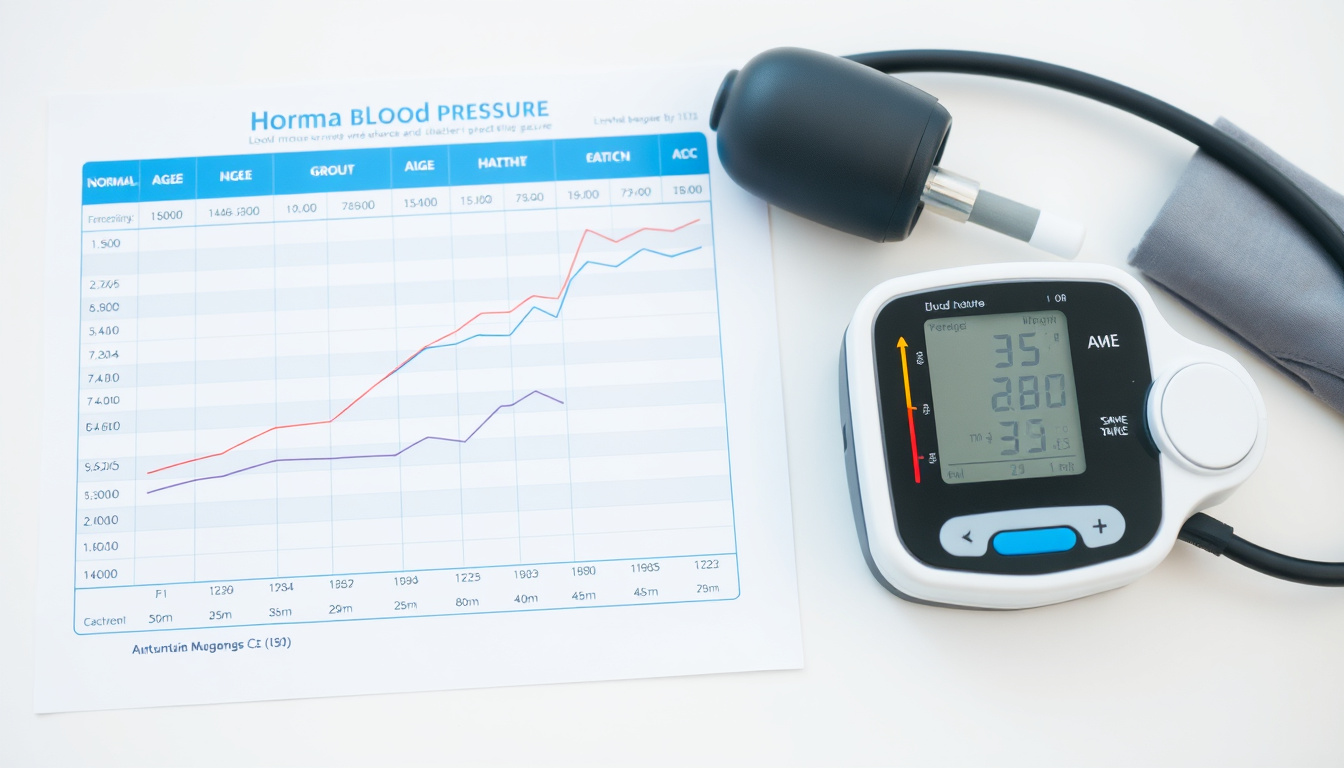
If you’ve ever wondered whether your blood pressure reading is actually good, you’re not alone. Most adults in the United States have their numbers checked at least once a year, yet many still feel uncertain about what those two numbers mean. The tricky part is that blood pressure isn’t one-size-fits-all — it shifts with age, differs between men and women, and follows patterns throughout the day that most people never consider. This guide walks through what the American Heart Association and Mayo Clinic say about normal ranges, which targets matter most for older adults, and what to watch for when numbers start climbing.
Normal blood pressure: <120/80 mmHg ·
High blood pressure threshold: ≥140/90 mmHg ·
Hypertensive crisis: >180/>120 mmHg ·
Stroke risk onset: Consistent ≥140/90 mmHg
Quick snapshot
- Normal BP is below 120/80 mmHg per the American Heart Association
- Stage 1 hypertension starts at 130-139/80-89 mmHg per AHA guidelines
- Hypertensive crisis demands immediate care at >180/>120 mmHg per AHA crisis thresholds
- Exact stroke threshold varies by individual health factors
- Long-term outcomes of strict vs. moderate control in seniors remain under study
- 2017 AHA update lowered “high” threshold from 140/90 to 130/80 mmHg
- This shift reclassified roughly 45% of US adults as hypertensive
- Adults 40+ or at high risk should be screened annually per Mayo Clinic screening guidelines
- Home monitoring gains prominence as guideline awareness grows (Mayo Clinic screening guidelines)
| Label | Value |
|---|---|
| Normal range | <120/80 mmHg |
| For seniors | Target <130 systolic per guidelines |
| Stroke risk starts | 140/90 mmHg consistently |
| Daily peak | Morning hours |
| US hypertension prevalence (2017-2018) | 45.4% of adults 18+ |
| Ideal reading | <120/70 mmHg |
What’s normal blood pressure for age?
Blood pressure norms vary across life stages, and what counts as healthy for a 25-year-old isn’t the same as what a 70-year-old should aim for. The American Heart Association defines normal as below 120/80 mmHg, but average readings shift with age and between genders due to hormonal differences. In children, normal ranges are considerably lower — newborns typically range from 60-90/20-60 mmHg, while school-aged children (ages 5-10) average 97-112/57-71 mmHg. Adolescents see readings of 112-128/66-80 mmHg as they approach adulthood.
For young adults aged 18-39, males average 119/70 mmHg while females average 110/68 mmHg, partly due to estrogen’s cardiovascular protective effect in women. This gender gap reverses after age 60, when women average 139/68 mmHg compared to men’s 133/69 mmHg — a shift attributed to post-menopause hormonal changes. Adults in the 40-59 age group fall between these ranges, with males averaging 124/77 mmHg and females 122/74 mmHg.
Normal blood pressure by age and gender
Three age bands tell most of the story. Adults 18-39 years show the widest gender gap, with males running about 9 mmHg higher in systolic pressure than females. By the 40s and 50s, the gap narrows considerably. After 60, women’s systolic pressure typically exceeds men’s — a pattern consistent across multiple clinical sources. These differences matter because one-size-fits-all thresholds can misclassify otherwise healthy adults, particularly older women whose “elevated” readings may actually be normal for their demographic.
Blood pressure chart per age
The table below summarizes average blood pressure across key life stages, with breakdowns by gender for adult age bands. Pediatric ranges are provided for context.
| Age group | Males average | Females average |
|---|---|---|
| 18-39 years | 119/70 mmHg | 110/68 mmHg |
| 40-59 years | 124/77 mmHg | 122/74 mmHg |
| 60+ years | 133/69 mmHg | 139/68 mmHg |
| School-aged (5-10) | 97-112/57-71 mmHg | Same range |
| Adolescents | 112-128/66-80 mmHg | Same range |
The pattern is clear: systolic pressure climbs with age while diastolic remains relatively stable or declines slightly in older adults. This matters because isolated systolic hypertension — elevated top number with normal bottom number — becomes the dominant concern for seniors, affecting an estimated 90% of those over 65 under the stricter 2017 guidelines. Arteries stiffen with age, raising systolic pressure while diastolic stays controlled. Managing conditions like Type 2 Diabetes alongside blood pressure requires careful coordination, as diabetes accelerates arterial damage.
Using the same 120/80 threshold for an 80-year-old and a 25-year-old can label a healthy senior as hypertensive. Age- and gender-adjusted charts give a more accurate picture of cardiovascular risk.
What is the new normal blood pressure for seniors?
Before 2017, adults over 65 could have blood pressure up to 150/80 mmHg and still be considered within range. The American Heart Association changed that threshold significantly. Under the 2017 guidelines, adults of any age are classified as hypertensive at 130/80 mmHg or higher — a shift that recategorized roughly 45% of all US adults as having high blood pressure. For seniors specifically, the goal tightened further: many clinicians now aim for systolic below 130 mmHg for adults over 65, with some evidence suggesting an ideal target below 120/70 mmHg where achievable.
The practical effect has been dramatic. Under pre-2017 standards, approximately 72 million Americans had hypertension. After the guideline update, that number climbed to over 100 million — meaning tens of millions of previously “normal” adults were suddenly encouraged to make lifestyle changes or start medication. For those over 65, this meant a recalibration of treatment goals, particularly for those with other cardiovascular risk factors. Mayo Clinic research confirms the new normal aligns with their own recommendations, emphasizing that below 120/80 mmHg represents the optimal range for most adults.
Blood pressure goals over 65
The target for adults over 65 depends on overall health and frailty. For relatively healthy seniors without significant comorbidities, systolic targets of 130 mmHg or lower are now standard. For those with multiple chronic conditions or limited life expectancy, a gentler target of 140/90 mmHg may still be appropriate to avoid medication side effects. The key distinction is between isolated systolic hypertension — where systolic exceeds 140 mmHg but diastolic stays below 80 — and combined hypertension affecting both numbers. The former is far more common in older adults and requires different treatment considerations than younger-onset hypertension.
Acceptable blood pressure for a 70-year-old
For an otherwise healthy 70-year-old, the American Heart Association recommends aiming for below 130/80 mmHg, with an ideal range below 120/70 mmHg where tolerated. Systolic readings consistently above 140 mmHg warrant discussion with a physician about treatment options. The “acceptable” range depends heavily on whether other risk factors are present — diabetes, prior stroke, kidney disease, or smoking history all lower the target threshold. Under the newer guidelines, about 90% of adults over 65 fall into the hypertensive category, which underscores how aggressively arteries stiffen with aging.
Tight control isn’t universally beneficial. Aggressive medication to achieve targets below 130 systolic can cause dizziness, falls, and kidney problems in frail seniors. Balance risk reduction against quality of life.
What is a stroke level blood pressure?
Blood pressure that reaches 180/120 mmHg or higher constitutes a hypertensive crisis — a medical emergency that requires immediate evaluation. When systolic pressure exceeds 180 mmHg, the risk of stroke rises sharply, though the exact threshold varies depending on individual factors such as age, other medical conditions, and how quickly pressure climbed. The American Heart Association classifies this range as requiring urgent medical attention, not simply a call to schedule a checkup.
What’s less clear-cut is precisely where stroke risk begins. Consistent readings at 140/90 mmHg mark the clinical threshold where hypertension-related stroke risk increases meaningfully, according to multiple sources. But individual risk profiles matter enormously — a person with diabetes, prior stroke, or kidney disease faces elevated stroke risk at lower readings than a healthy 50-year-old. This variability is why self-monitoring and communication with your physician matter more than memorizing a single number.
Stroke-level readings
At 180/120 mmHg, the likelihood of acute cardiovascular events including stroke escalates rapidly. However, strokes can occur at lower pressures in people with other risk factors, particularly those with atrial fibrillation, prior transient ischemic attacks, or significantly narrowed arteries. The American Heart Association distinguishes between “hypertensive urgency” (extremely elevated pressure without organ damage) and “hypertensive emergency” (elevated pressure with evidence of organ damage, including neurological symptoms). The latter, with neurological signs, is the true stroke-level scenario requiring emergency response.
High blood pressure and stroke risk
High blood pressure remains the single most important modifiable risk factor for stroke. The relationship is dose-responsive: the higher and more sustained the pressure, the greater the stroke risk. Systolic pressure above 140 mmHg roughly doubles stroke risk compared to readings below 120 mmHg. For those with readings persistently above 180 mmHg, the risk curve becomes steep enough that emergency protocols activate. Even sustained readings at 140/90 mmHg meaningfully increase stroke risk over time, which is why treating even “moderate” hypertension matters.
Sudden onset of severe headache, confusion, vision changes, difficulty speaking, or weakness on one side of the body alongside very high readings (180+/120+) warrants calling 911 immediately — these are classic stroke warning signs.
Is 140 over 70 a good blood pressure?
A reading of 140/70 mmHg presents a specific pattern worth understanding. The systolic number (140) falls into the elevated range that warrants attention, while the diastolic (70) remains comfortably within normal limits below 80. This combination is called isolated systolic hypertension, and it’s the most common form of high blood pressure in adults over 65. It doesn’t signal heart strain the way combined elevation would, but it still indicates increased cardiovascular risk.
Under the American Heart Association framework, this reading would place most adults in Stage 2 hypertension (systolic ≥140 regardless of diastolic) if it persists. However, a single reading doesn’t establish a diagnosis — multiple measurements on different days are needed. White coat hypertension, where anxiety at the doctor’s office temporarily elevates readings, can also produce isolated systolic readings that don’t reflect real-world pressure. Mayo Clinic and the American Heart Association both recommend home monitoring to confirm whether readings in this range are consistent or situational.
Evaluating 140/70 reading
Several factors determine whether a 140/70 reading is concerning. Age is primary: in adults under 50, such a reading would be unusual and more worrying than in a 70-year-old, where arterial stiffening naturally raises systolic pressure. Duration and consistency matter — one isolated reading means little, but a pattern of sustained elevation above 140 systolic across multiple checks at home warrants clinical review. Accompanying risk factors (smoking, diabetes, high cholesterol, family history) amplify the significance of any given reading.
Isolated systolic hypertension
This condition — systolic pressure ≥140 mmHg with diastolic below 90 mmHg — affects a large portion of the older population. Arteries lose elasticity with age, making it harder to cushion the force of blood ejecting from the heart. The result is higher systolic pressure but normal or even low diastolic pressure, creating a widened pulse pressure (the gap between the two numbers). A gap of 70 mmHg (140 minus 70) is significant and correlates with increased cardiovascular event risk, particularly heart failure and stroke. Treatment typically focuses on systolic reduction while preserving the normal diastolic level.
Treating isolated systolic hypertension can sometimes lower diastolic too much — particularly with diuretics or ACE inhibitors. Some seniors develop dizziness or falls when diastolic drops below 65 mmHg, creating a delicate balancing act for physicians.
What time of day is blood pressure highest?
Blood pressure follows a predictable daily rhythm tied to the body’s circadian clock. Most people’s pressure starts rising in the early morning hours, typically between 4 AM and 6 AM, coinciding with the body’s preparation for waking. It peaks in the late morning to early afternoon, then gradually declines through the afternoon and evening, reaching its lowest point during sleep — usually between midnight and 3 AM. This pattern means that a reading taken at 8 AM and one taken at midnight can look dramatically different in the same person.
The morning surge has clinical significance. Blood tends to be “stickier” in the early morning hours — more prone to clotting — just as blood pressure is climbing toward its daily peak. This combination of factors explains why heart attacks and strokes occur more frequently in the morning hours. Mayo Clinic and other clinical sources specifically note that morning readings deserve special attention when evaluating hypertension, as they often represent the true peak of the daily cycle.
Daily blood pressure patterns
Beyond the morning surge, blood pressure fluctuates throughout the day in response to activity, posture, eating, stress, and temperature. Physical exertion raises pressure temporarily, as does emotional stress or even a full bladder. Cold weather tends to raise pressure while heat lowers it. These fluctuations are normal and expected — what matters clinically is whether the overall pattern sits in a healthy range. The concept of “masked hypertension” describes when readings appear normal at the clinic but are actually elevated at home or during work hours, typically in the afternoon for office workers. Chronic respiratory conditions like COPD can also affect blood pressure patterns and should be discussed with your provider.
Morning peaks
For most adults, the period from 6 AM to noon represents the daily high point. Taking medication in the morning is often recommended precisely to blunt this surge before it peaks. If morning readings consistently exceed 140/90 mmHg while afternoon readings are normal, that pattern warrants discussion with a physician about timing adjustments or additional medication. Home monitoring programs increasingly emphasize morning checks specifically, as they’re most predictive of long-term cardiovascular outcomes in studies. The American Heart Association recommends measuring at least twice daily — once in the morning before medication and once in the evening — for accurate picture of one’s pressure pattern.
A single morning reading of 145/85 doesn’t mean you have uncontrolled hypertension. But if morning readings consistently run high while evening readings stay normal, your treatment timing may need adjustment.
What experts say
The new normal range for blood pressure recommended by the American Heart Association is below 120/80 mmHg.
Under those new guidelines, more than a hundred million people — that’s more than forty-five percent of American adults — have high blood pressure.
— Dr. Sandra Taler, Nephrologist, Mayo Clinic
Premenopausal women are known to have lower blood pressure than age-matched men, again suggesting sex hormones may influence age-dependent gender differences.
Upsides
- Clear classification system helps patients understand their risk level
- Age- and gender-specific norms prevent over-treatment in healthy seniors
- Home monitoring catches white coat hypertension and masked hypertension
- Morning peak awareness enables better medication timing
Downsides
- New 2017 thresholds reclassified millions as “hypertensive,” increasing medication use
- Tight control targets can cause side effects in frail older adults
- Individual variation means charts don’t capture everyone’s personal baseline
- Gender differences after 65 create confusion about which targets to follow
Summary
Blood pressure norms have shifted meaningfully since 2017, with the American Heart Association lowering the hypertension threshold from 140/90 to 130/80 mmHg. This change recategorized nearly half of all US adults as having elevated pressure — a controversial but evidence-backed recalibration. For most adults, the target remains below 120/80 mmHg, with those over 65 often advised to stay below 130 systolic. Readings of 140/70 or higher warrant attention even if diastolic looks normal, particularly in older adults. The morning hours carry the highest risk, making early-day monitoring and medication timing clinically significant. For anyone whose systolic pressure consistently exceeds 180 mmHg, emergency evaluation is warranted — stroke risk climbs steeply at that level, though individual factors determine exactly when intervention becomes urgent.
baptisthealth.com, doctronic.ai, oakstreethealth.com, commonspirit.org, sesamecare.com, mayoclinic.org, health.harvard.edu, mayoclinic.org
As detailed in AHA guidelines and similar resources like the age blood pressure chart, normal blood pressure ranges shift notably by age and gender throughout adulthood.
Frequently asked questions
What causes low blood pressure?
Low blood pressure (hypotension) can result from dehydration, certain medications, heart problems, endocrine issues, or severe infection. Some people naturally have low pressure without health problems. Symptoms like dizziness, fainting, or fatigue when standing suggest orthostatic hypotension, which warrants medical evaluation.
What is diastolic blood pressure?
Diastolic blood pressure is the bottom number in a reading, representing the pressure in arteries when the heart rests between beats. Normal diastolic is below 80 mmHg. While systolic pressure gets more attention in older adults, diastolic matters too — a gap wider than 60 mmHg between systolic and diastolic suggests arterial stiffness.
What is systolic blood pressure?
Systolic blood pressure is the top number, measuring the pressure in arteries when the heart contracts and pumps blood out. It’s the more important predictor of cardiovascular risk in adults over 50 and the number most affected by age-related arterial stiffening. Normal systolic is below 120 mmHg.
How to read blood pressure numbers?
A reading of 120/80 mmHg means systolic is 120 and diastolic is 80. The units (mmHg) stand for millimeters of mercury, the historical measure of pressure. Systolic always comes first. When either number reaches or exceeds threshold — 130/80 for hypertension — clinical action is warranted under current guidelines.
What is a blood pressure chart?
A blood pressure chart categorizes readings into ranges (normal, elevated, hypertension Stage 1 and 2, hypertensive crisis) and may break them down by age and gender. The American Heart Association and Mayo Clinic provide standardized charts that clinicians and patients use to interpret individual readings against population norms.
Does blood pressure vary by gender?
Yes. Before menopause, women typically have lower systolic pressure than age-matched men due to estrogen’s protective effects. After age 60, the pattern reverses — women often have higher systolic pressure than men. These differences are incorporated into age- and gender-specific charts for more accurate risk assessment.
What are symptoms of high blood pressure?
High blood pressure is often called the “silent killer” because it typically causes no symptoms until damage is already done. When symptoms do occur, they may include severe headache, vision changes, shortness of breath, or nosebleeds — usually indicating a hypertensive crisis. Regular monitoring is the only reliable way to detect elevated pressure before complications develop.

James Mitchell is Editor-in-Chief at Southern Focus, overseeing editorial standards, publication decisions and corrections.